
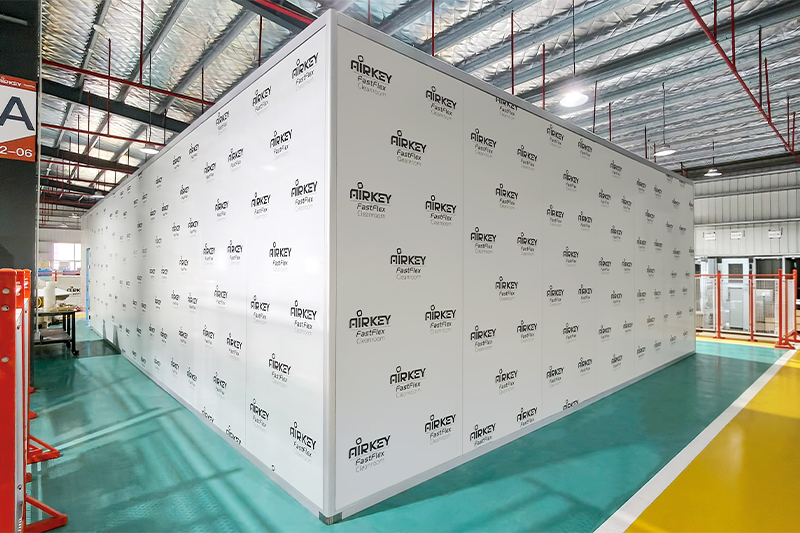
In a significant step toward expanding its global footprint, Airkey, a leading Chinese manufacturer of modular cleanroom systems, has successfully designed, fabricated, and delivered a large-scale freestanding modular cleanroom facility for a medical appliances manufacturer in Tanzania. The project, which marks an important milestone in Airkey’s growing presence in the East African market, demonstrates the company’s capacity to deliver turnkey contamination control environments that meet both international standards and the specific operational requirements of the medical device industry.
Project scope and facility dimensions
The modular cleanroom complex occupies a substantial footprint, measuring 27,526 mm in length, 19,980 mm in width, and 3,365 mm in height. This expansive facility was configured to support the full production workflow of the client’s medical appliance manufacturing operations, with careful attention paid to spatial organisation and functional zoning. The largest individual room within the facility is dedicated to finished goods storage, featuring an impressive clear span of 9 meters. This broad, column-free interior space was a critical requirement for the client, as it allows for flexible racking configurations, efficient material handling, and unobstructed movement of finished products prior to distribution.
Freestanding structural design
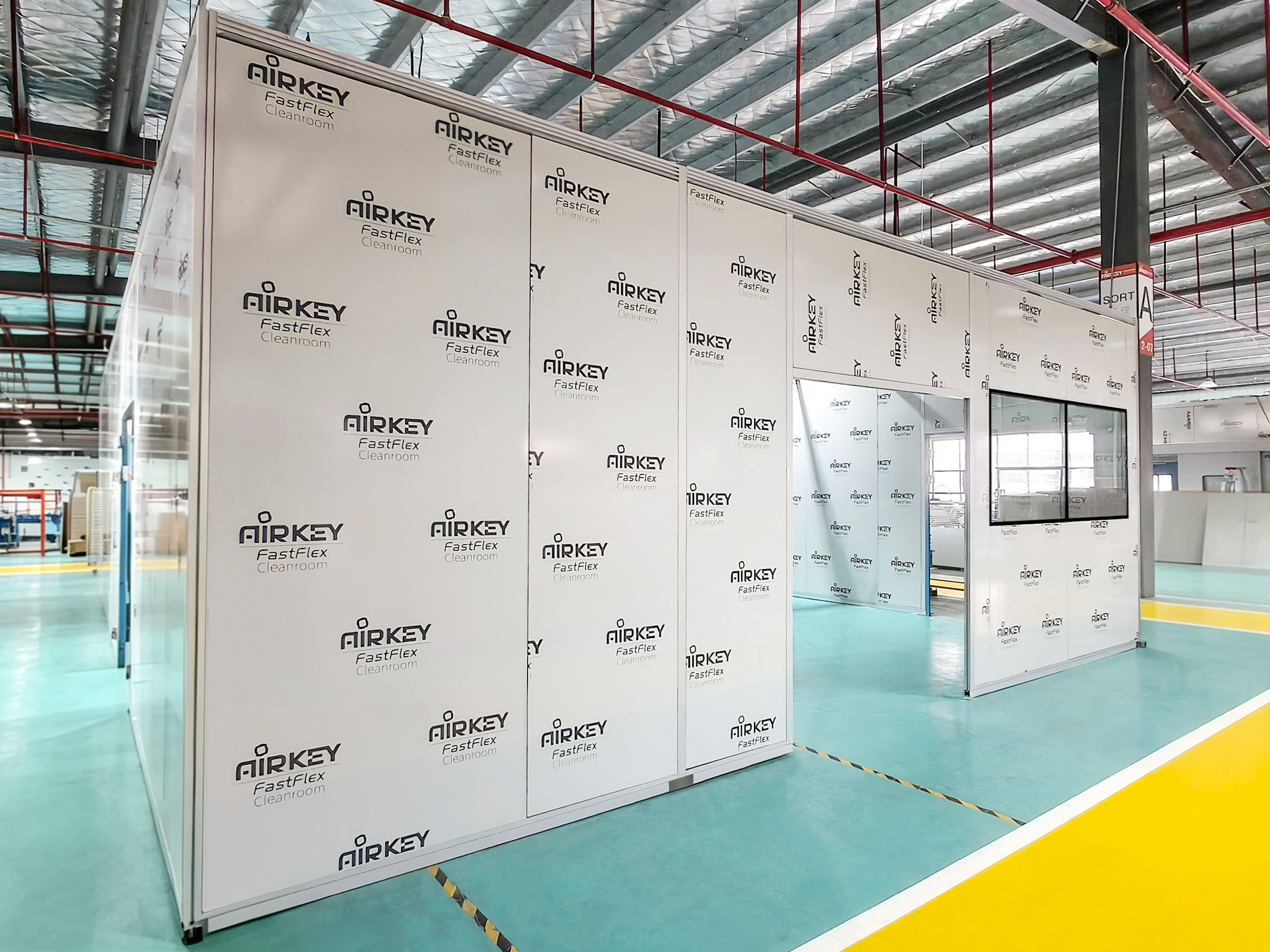
One of the standout engineering achievements of this project is the fully freestanding nature of the modular cleanroom. Unlike many conventional cleanroom installations that require structural suspension from the existing building roof or ceiling grid systems, Airkey’s modular system is entirely self-supporting.
The 9-meter-span finished goods storage room, in particular, posed a significant structural challenge, as large-span freestanding enclosures typically require careful engineering to ensure stability, rigidity, and seal integrity without relying on overhead support. Airkey’s design team addressed this through a robust aluminium frame system that carries all vertical and lateral loads independently, eliminating the need for any connection to the host building’s structural elements. This approach not only simplifies installation but also gives the client full flexibility to relocate or reconfigure the cleanroom in the future without major building modifications.
Cleanliness classification and environmental control
The cleanroom was certified to ISO 9 cleanliness class, which corresponds to a particulate concentration limit of 35,200,000 particles per cubic meter for particles ≥0.5 µm. While ISO 9 represents the least stringent end of the ISO cleanroom classification scale, it remains entirely appropriate for the finished goods storage application and certain non-critical stages of medical appliance assembly where airborne particulate control is still beneficial but where the product is not at risk from low-level contamination.
More critical manufacturing steps within the facility are protected through a combination of controlled access, positive pressurisation, and the overall barrier provided by the modular enclosure.
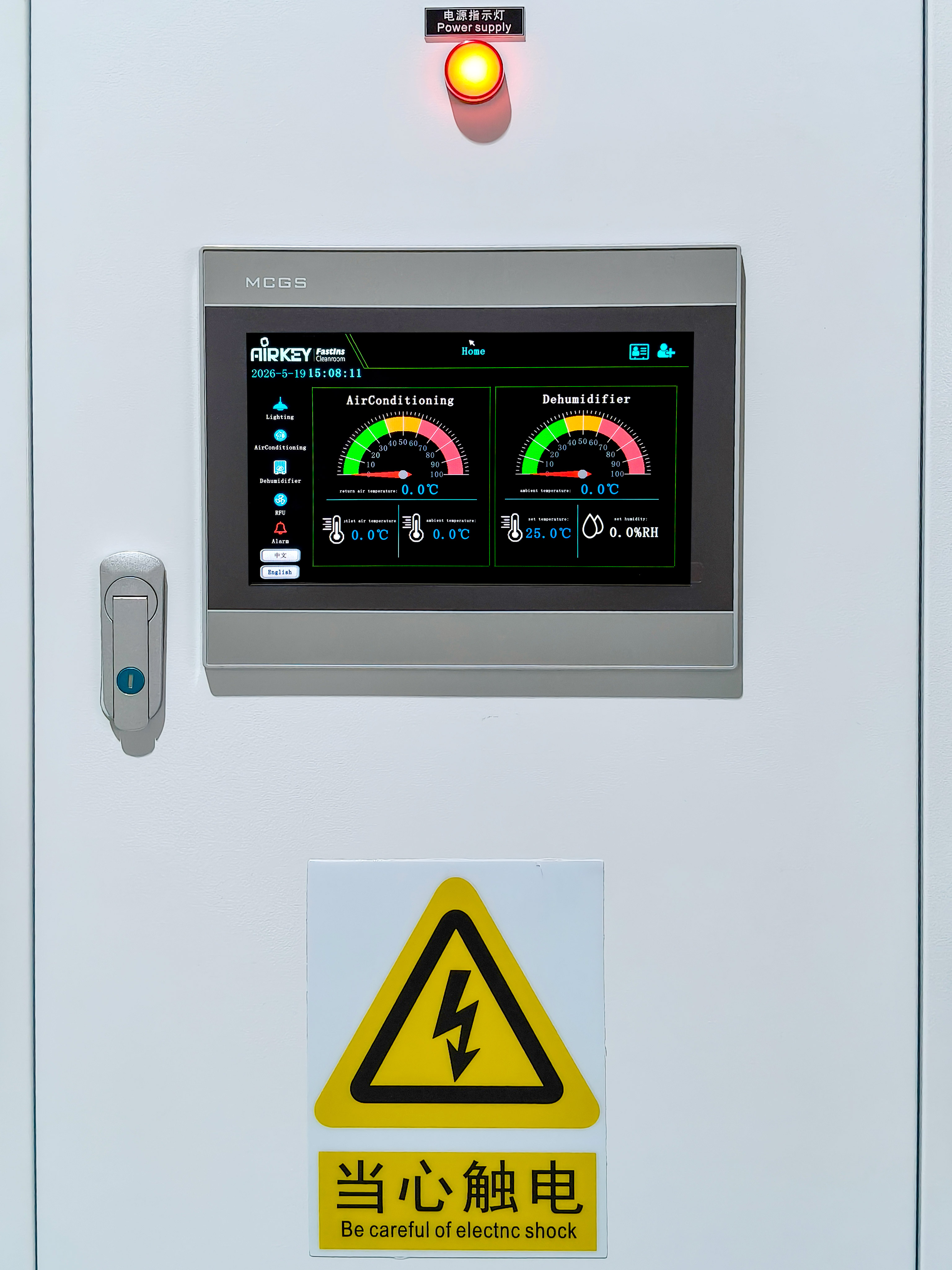
Temperature and humidity control are essential for medical appliance manufacturing, as fluctuations can affect material properties, adhesive performance, and packaging integrity. To address this, Airkey equipped the facility with a split-type air conditioning system for temperature regulation and a ducted dehumidifier for moisture control. The system is designed to maintain a consistent temperature range of 20 to 25 degrees Celsius and relative humidity below 75 percent. These parameters were established in collaboration with the client based on their specific production requirements and the ambient climatic conditions in Tanzania, where coastal humidity can be a challenge. The split AC units provide efficient, localised cooling, while the ducted dehumidifier ensures that moisture is extracted evenly throughout the space, preventing condensation on surfaces and maintaining a stable environment for both personnel comfort and product integrity.
Materials and construction methodology
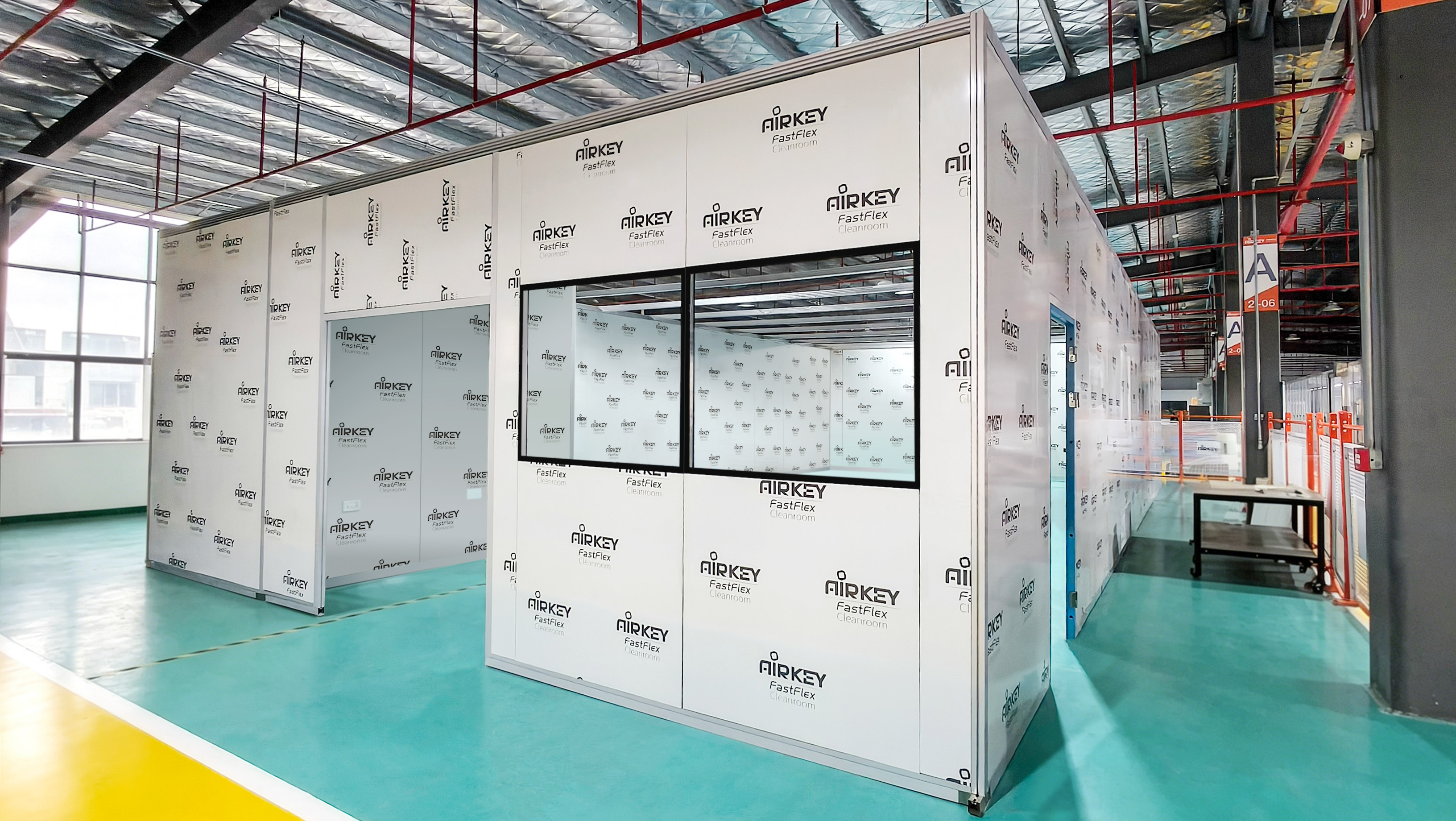
Every component of the modular cleanroom was fabricated in Airkey’s Chinese manufacturing facility using high-quality, durable materials selected for their cleanroom compatibility, structural performance, and ease of maintenance. The primary framing consists of precision-extruded aluminium profiles, which offer an excellent strength-to-weight ratio, corrosion resistance, and a smooth surface finish that minimises particle accumulation.
The wall and ceiling panels are constructed from rock wool sandwiched steel sheets, providing effective thermal insulation, fire resistance, and sound attenuation. The rock wool core also contributes to the structural rigidity of the panels while maintaining the lightweight characteristics that make modular construction efficient.
For natural light and visual monitoring, tempered glass windows were integrated into the panel system at strategic locations. These windows not only enhance the working environment by reducing the enclosed feel of the cleanroom but also allow supervisors to observe operations without compromising the controlled environment.
The ceiling system incorporates a grid structure with individual ceiling panels, which can be selectively removed or adjusted to accommodate future equipment installations, utility drops, or modifications. This modular ceiling design is a hallmark of Airkey’s approach, ensuring that the cleanroom can adapt to evolving production needs without major reconstruction.
Customer inspection and quality assurance
A critical phase of the project was the customer’s factory inspection visit, during which representatives from the Tanzanian client traveled to Airkey’s manufacturing facility to witness the preassembled cleanroom firsthand. This visit provided an invaluable opportunity for the client to assess the quality of workmanship, verify that the dimensions and layout matched their expectations, and observe the performance of the environmental control systems in a controlled setting. The client conducted their own measurements, reviewed the sealing integrity of the panels, inspected the glass window installations, and evaluated the overall finish and aesthetic quality of the cleanroom.
The inspection concluded with the client expressing full satisfaction with the product. This positive outcome was the result of Airkey’s rigorous internal quality assurance protocols, which include material traceability, weld and joint inspections, panel flatness checks, and system function tests. The client’s approval at the factory stage also eliminated the risk of costly surprises during installation, as the design and performance had already been validated under factory conditions.
Following the successful inspection, the modular cleanroom was disassembled, carefully packed for ocean freight, and shipped to Tanzania.