
Blueprint for a Johor-Singapore “special economic zone” aims to accelerate advanced manufacturing growth

By Alexa Hornbeck | Published: 1-Apr-2026

A new blueprint and master plan has been launched to create a zone offering economic incentives to accelerate the delivery of products for the semiconductor, pharmaceutical, and precision engineering industries in Malaysia and Singapore

A blueprint and master plan for a Johor-Singapore Special Economic Zone (JS-SEZ) was launched on 30 March in Johor Bahru, a major city in southern Malaysia.

Companies already operating in Johor range from global logistics giants like FedEx to advanced manufacturers such as ResMed, alongside regional players including Archisen and Armstrong Industrial Corporation.

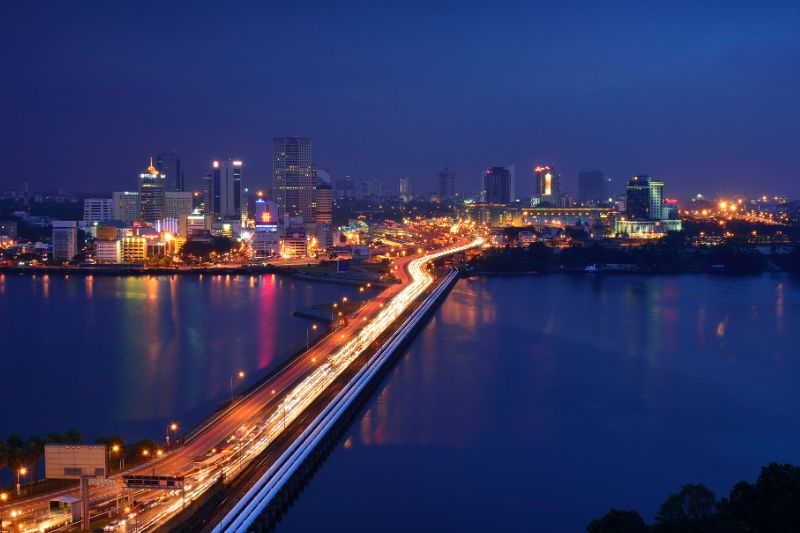
The companies highlighted how operating along the Johor–Singapore Causeway, the 1 km-long road and rail link connecting Malaysia and Singapore, has enabled them to access Singapore’s markets, talent, and infrastructure while benefiting from Johor’s lower operating costs and room for expansion.

The zone is expected to accelerate the expansion of cleanroom-intensive industries across the region.

The JS-SEZ blueprint was established to create incentives, opportunities, and an operational framework for the zone, following coordination with Singaporean and Johor state leaders.

“We have agreed to hold the launch in Johor Bahru so that the people of Johor can truly feel the impact,” said Akmal Nasrullah Mohd Nasir during the Johor Dialogue 2026 at the Majlis Bandaraya Johor Bahru Tower.

The JS-SEZ is positioned to support sectors requiring controlled environments, including semiconductor manufacturing, life sciences, and advanced electronics, where cleanroom infrastructure is critical to production quality, regulatory compliance, and yield optimisation.

The zone was established with the aim of strengthening Johor’s appeal as a destination for high-value manufacturing and cross-border supply chains.

Accelerating next-gen facilities and Johor’s plans

The JS-SEZ is expected to support the development of next-generation facilities by maintaining contamination control conditions while improving environmental performance.

The special economic zone is also intended to drive Johor’s goal of achieving a Gross Domestic Product (GDP) of RM260bn (roughly $62.4bn) by 2030. 

This target represents a significant acceleration in growth, projected to surpass 12% of Malaysia's total GDP.

The blueprint also aligns with Malaysia’s 13th Malaysia Plan (13MP), which emphasises delivery-focused infrastructure and measurable economic outcomes. 

Within this plan, the rollout of cleanroom-enabled facilities is expected to be central to attracting investment in sectors where environmental control, energy efficiency, and operational reliability are key.

The JS-SEZ also supports the goals of the Progress Johor 2030 masterplan, branded under "Maju Johor," which aims to transform the state into a developed, sustainable economic powerhouse by 2030. 

This will be achieved by creating more than 20,000 high-skilled jobs, many of which are likely to be linked to technically advanced manufacturing and cleanroom operations.

Officials emphasised that the success of the JS-SEZ development strategy will depend on coordinated execution. 

Ministries, agencies, and industry stakeholders will be tasked with delivering complex infrastructure at pace to meet investor demand and ensure long-term competitiveness.

Trending Articles

  1. You need to be a subscriber to read this article.
    Click here to find out more.

You may also like