

Bosch has reached a definitive agreement with the US Department of Commerce for up to $225m in direct CHIPS Program funding.
The US CHIPS and Science Act was passed by Congress and signed into law in 2022 to boost domestic semiconductor manufacturing, reduce reliance on Asian supply chains, and secure technological sovereignty.
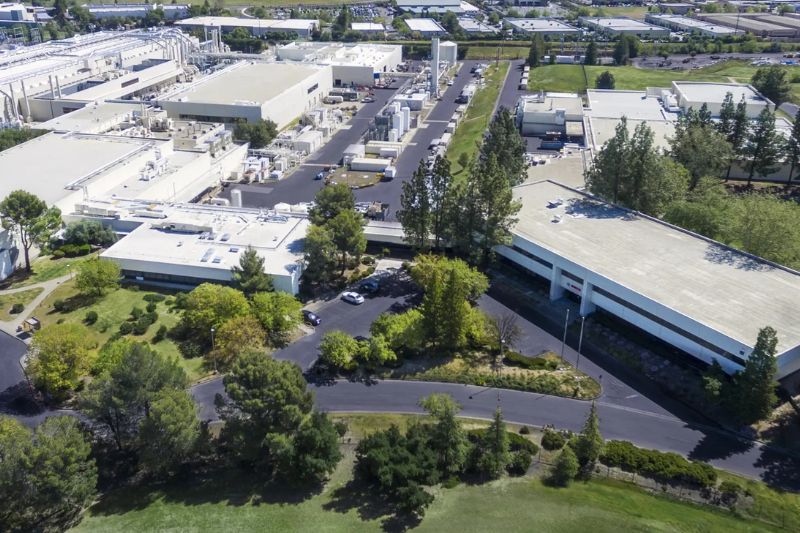
The funds will support the company's planned investment of up to $2bn to convert its Roseville, California facility into a high-volume manufacturing site for silicon carbide (SiC) semiconductors.
The funding milestone comes as the site begins sample production using newly developed cleanroom space and advanced manufacturing lines designed for 200 mm SiC wafer processing.
Commercial production is scheduled to begin in 2026, three years after Bosch announced its acquisition of the former wafer fabrication facility.
The Roseville facility, which has more than four decades of semiconductor manufacturing experience, is being equipped with new cleanroom infrastructure, state-of-the-art process equipment and testing capabilities to manufacture SiC devices for automotive and industrial energy applications.
The expansion is intended to strengthen domestic semiconductor production while supporting localised supply chains for North American customers.
Silicon carbide semiconductors are increasingly being adopted in electric vehicles, charging infrastructure and industrial power electronics because of their ability to operate at higher voltages, temperatures and switching frequencies than conventional silicon devices, improving efficiency and reducing energy losses.
According to Bosch, the Roseville site currently employs more than 300 associates, with potential for future workforce growth as market demand develops.
In addition to the federal funding agreement, the project has received a $25m California Competes Tax Credit to support redevelopment and investment at the facility.
“Silicon carbide semiconductors are the enabling technology behind the electrification in multiple critical industries including energy, automotive, and defence,” said Bill Frauenhofer, Executive Director for Semiconductor Innovation and Investment at the Department of Commerce.


