

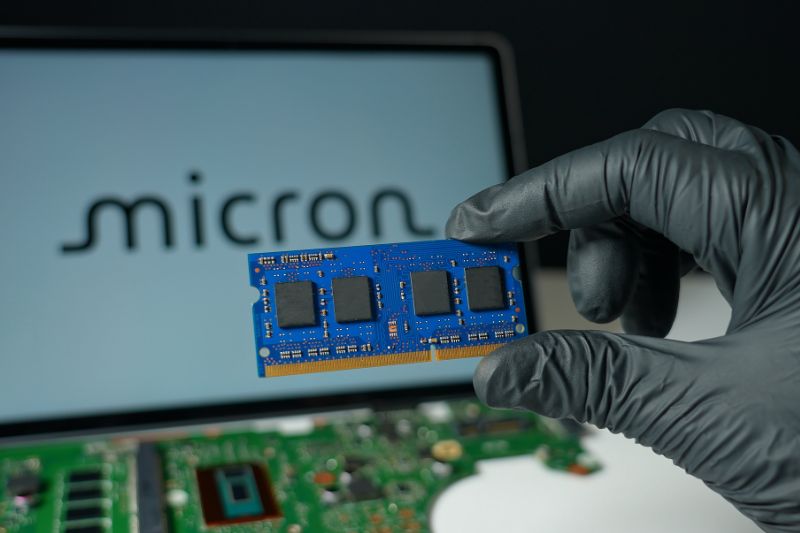
Micron Technology is separating cleanroom construction from equipment installation as it looks to expand semiconductor manufacturing capacity.
The approach will allow the company to prepare cleanroom space before installing the specialist equipment required for chip production, giving it greater flexibility over the timing of capacity expansion as customer demand develops.
The strategy comes as Micron increases investment in manufacturing facilities to support demand for dynamic random-access memory (DRAM) and high-bandwidth memory (HBM), which are used in artificial intelligence (AI) servers and data centres.
In March, Micron completed its acquisition of Powerchip Semiconductor Manufacturing Corporation’s P5 site in Tongluo, Taiwan.
The facility includes approximately 27,870 sqm of existing cleanroom space, which Micron plans to retrofit, alongside a second cleanroom of approximately 25,080 sqm.
Construction of the second facility is planned to begin by the end of fiscal 2026, with meaningful product shipments from the existing fab expected from fiscal 2028.
Taiwan operations face labour tensions
Micron’s expansion plans come amid a dispute between the company and its Taiwanese workforce over employee bonuses and profit-sharing.
On 15 October, Taiwan President Lai Ching-te called on Micron and its workers to negotiate constructively ahead of a possible strike.
The dispute follows a vote in which 99% of 1,994 voting members of a union representing workers in Taoyuan authorised strike action.
The union is seeking a permanent profit-sharing mechanism and has criticised the company’s employee reward package for failing to address its demands.
Micron has said it takes employee concerns seriously and remains committed to working with its unions through established dialogue and mediation processes.
Micron employs approximately 15,000 people in Taiwan, a key manufacturing hub for its memory products.
The company has also recently opened an advanced assembly and testing facility in Taichung, where demand for HBM products used in AI servers remains strong.
Micron’s shares also fell 4.2% in pre-market trading, as higher-than-expected US inflation fuelled concerns over interest rates, while growing competition from Chinese memory-chip manufacturers added pressure across the semiconductor sector.


