

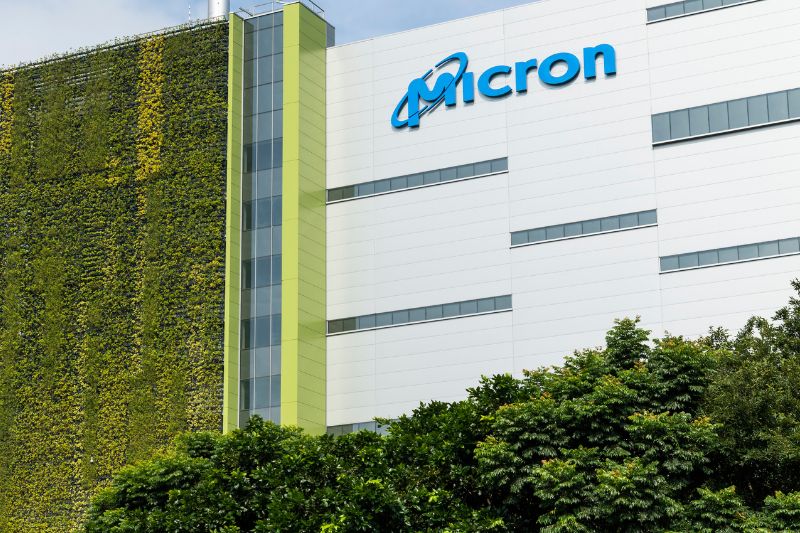
The US chip manufacturer Micron Technology has signed a Letter of Intent to acquire the Powerchip Semiconductor Manufacturing Corporation (PSMC) P5 fabrication site in Tongluo, Taiwan.
The strategic move, valued at $1.8 bn, would strengthen Micron’s manufacturing capacity with an established 300 mm fabrication cleanroom facility and lay the groundwork for a long‑term operational partnership with PSMC.
Increased DRAM manufacturing timeline
The P5 facility already includes approximately 300,000 sqft of controlled cleanroom space tailored for memory production on 300 mm silicon wafers.
The configuration aligns with industry standards for cost‑efficient, high‑volume DRAM manufacturing.
Such cleanrooms maintain stringent particulate, temperature and humidity control to enable defect‑free processing of advanced memory wafers, a prerequisite for reliable DRAM production.
Micron plans to assume ownership and operational control of the Tongluo site following completion of formal agreements and regulatory clearances, anticipated to be completed by Q2 of 2026.
Once closed, the facility will be equipped and ramped in phases to support meaningful DRAM wafer output beginning in the second half of 2027.
Partnership with PSMC
Beyond the cleanroom acquisition, the letter of intent outlines a broader collaboration with PSMC.
The agreement includes provisions for post‑wafer assembly support and cooperative engagement around PSMC’s legacy DRAM portfolio.
This reflects a hybrid operational strategy in which Micron will augment its capacity while leveraging local expertise during the transition period.
The Tongluo fab’s proximity to Micron’s existing Taichung facilities in Taiwan is expected to enable operational synergies, such as streamlined logistics and shared engineering resources, enhancing throughput and yield optimisation across the regional DRAM network.
Increased capacity to mitigate contamination risks
A controlled environment of the scale at Tongluo not only supports high‑volume DRAM fabrication but also helps mitigate contamination risks.
It can help Micron achieve high yields and a competitive cost per bit.
By securing an existing, fully outfitted cleanroom facility, Micron accelerates its capacity expansion timeline compared with greenfield construction, which typically involves multi‑year development cycles to achieve equivalent controlled environment specifications.
The rise in PSMC shares
Micron’s announcement has already resonated in the market, with shares of PSMC climbing in response to the transaction news.
This underscores investor recognition of the strategic value of cleanroom‑enabled fabrication assets amid ongoing memory supply tightness.
The Tongluo acquisition complements concurrent expansion plans, including major fab developments in the US.
Micron’s expanding global footprint
Late last year it was announced that Micron’s planned $100 bn DRAM fab in Clay, New York, currently faces a two‑to three‑year construction delay, highlighting the challenges of building large‑scale cleanroom facilities.
Last year, Micron also partnered with the University at Buffalo and SUNY Erie on cleanroom training.
Globally, in 2023, the company also selected Tata Projects to build India’s first 500,000 sqft semiconductor assembly and test facility in Gujarat.


