

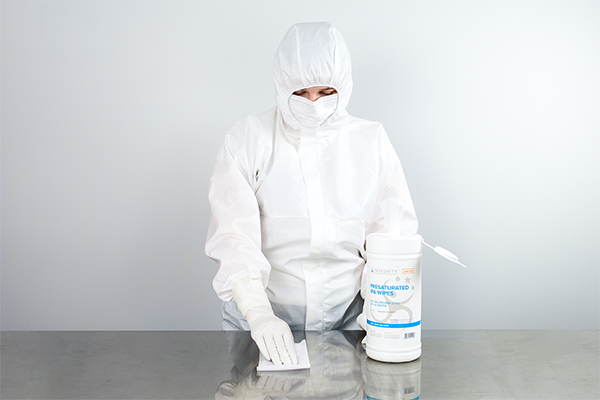
A ban on the sale and supply of plastic-containing wet wipes to consumers is set to come into force in spring 2027, following an 18-month transition period.
However, wipes used in cleanrooms, laboratories and medical environments will be exempt under professional-use provisions.
“We are exempt from these restrictions,” Kay Goddard, Cleanroom Specialist at Antistat & Integrity, told Cleanroom Technology. “Our professional-grade products are supplied exclusively for industrial or medical use and not sold to individual consumers.”
The legislation is designed to tackle plastic pollution associated with single-use consumer wipes.
Under the forthcoming regulations, the ban applies to wet wipes defined as “a non-woven piece of fabric which has been pre-wetted and which is not designed or intended to be re-used” when they contain plastic and are supplied to consumers.
Why cleanroom wipes are treated differently
Government guidance confirms that wholesalers and manufacturers will be able to continue selling and supplying wet wipes for professional use in medical settings, including dental surgeries and pharmacies, as well as laboratories and scientific environments.
Professional-use wipes, including those designed for cleanrooms and specialist industrial settings, are excluded where they are deemed vital for infection control, patient safety and operational safety.
Exemptions apply where no suitable plastic-free alternatives currently exist.
“Currently there is not an effective plastic-free alternative that meets the strict performance requirements of a controlled environment,” said Goddard.
Demonstrating compliance
Although exempt from the consumer ban, businesses that use or supply plastic-containing cleanroom wipes must be able to demonstrate that their products qualify under the legislation.
“Companies need to ensure they are using professional grade cleanroom wipes such as our Integrity IPA tub wipes, and that their specific application qualifies for the ‘medical/clinical’ or ‘business-to-business’ exemption,” said Goddard.
Organisations operating in regulated environments will need to ensure that the wipes they procure are clearly classified for professional use and that their application falls within the medical, clinical or industrial exemptions.
Goddard added that any new plastic-free substrates brought to market will need to be tested and validated to ensure they do not compromise cleanliness, chemical compatibility or linting levels required in controlled environments.
Preparing for spring 2027
With enforcement expected from spring 2027, businesses have an 18-month transition period to review procurement practices and compliance documentation.
“Businesses will have to prove that their wipes fall under specific exemptions for industrial/technical use by means of technical documentation, such as Certificates of Conformity or Technical Data Sheets,” said Goddard.
Companies using cleanroom wipes are advised to:
- Confirm their wipes are classified for professional use
- Ensure supply chains are strictly business-to-business
- Maintain up-to-date technical documentation
- Validate any alternative substrates before adoption
Any new plastic-free materials introduced to the market will require rigorous testing to ensure they do not compromise cleanliness standards, chemical compatibility or linting performance within controlled environments.
While the ban represents a significant shift for the consumer wipes market, professional sectors reliant on high-specification contamination control products are expected to continue operating under defined exemptions, provided compliance requirements are clearly met.



