

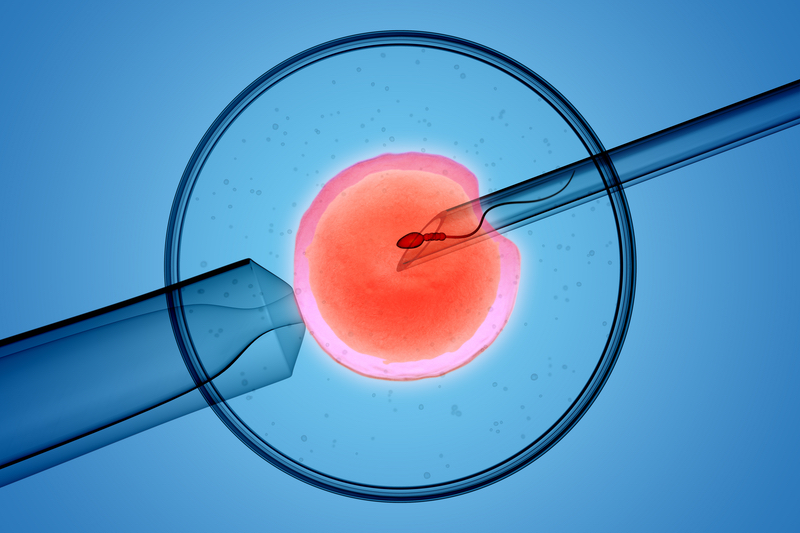
In vitro fertilisation (IVF) is an assisted reproductive technology in which an egg is fertilised by sperm in a laboratory environment, before implantation back into the body.
Handling biological material is an extremely protected and controlled process. It is well known that bacterial contamination can cause loss or damage to an egg or developing embryos. But air quality and the presence of VOCs can also have significant impacts on the success of the embryo.
Because of this, laminar flow hoods and other containment systems were introduced to improve the situation. However, there is still frequent opportunity for human error to cause loss or damage during the process.
In 2026, the industry is trying to use automation and AI to address many of these challenges. There are plenty of applications in the IVF process that could be assisted by automated and AI solutions:
Robotic manipulation: The scale at which these sperm need to be injected into an egg is at the micron-level. Giving robots the capability could not only remove a human contaminant from the process, but also give greater precision to the process. This also reduces the human error due to fatigue and standardises the technique.
In 2026, most current systems are “semi-automated” rather than fully robotic. To be plain, the embryologist still controls the injection, but technology is used to stabilise and scale the movement, as well as assist with positioning and repeatability. Fully robotic Intracytoplasmic Sperm Injection (ICSI) is emerging but not yet widespread clinically.
Products like TransferMan 4m and Narishige ICSI Micromanipulator System are now common around the world.
Automated dish handling: A technology that is quickly advancing in cleanroom monitoring, automated culture dish handling can remove the human from the environment, and give great traceability and standardisation.
Controlled incubators: A time-lapse incubator is a specialised embryo culture system that maintains temperature and CO2 conditions, with built-in microscopes and cameras to take image records during growth from fertilisation to blastocyst stage. These can even create time-lapse videos of the entire growth. Products like EmbryoScope+ and Geri+ Time-Lapse Incubator are used in high-end IVF cleanrooms
AI-driven embryo assessment: Using AI algorithms to grade embryos to predict viability minimises subjective human assessment, creating more standardisation. The images from the time-lapse incubators can be invaluable in helping with this assessment.
Overall, these technologies are now also looking to integrate with standard cleanroom controls to create connected workflow systems. Modern IVF lab automation strategies are moving toward device and data integration across lab systems. This means linking incubators with environmental sensors into central lab management software. This would allow constant visibility and monitoring across the environment and all of its component parts.
There are now purpose‑built IVF lab monitoring platforms (e.g., the LabCare system) that create a connected ecosystem where various critical hardware devices communicate in real‑time to provide holistic oversight of the lab’s environmental state. These systems use IoT technology, provide real‑time data and alerts, and enhance compliance and operational efficiency.
What is the outlook for IVF automation?
It is clear that humans are a challenge to be addressed in the IVF landscape, from both a


