

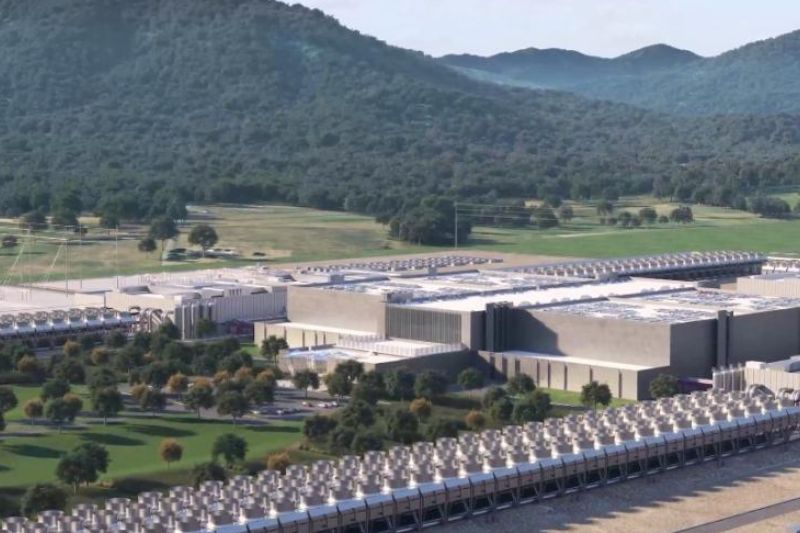
Jacobs has unveiled a digital twin platform designed to streamline the design, delivery and operation of AI data centres and cleanroom environments.
Built on NVIDIA’s Omniverse DSX blueprint, the system allows teams to simulate facility performance, test design assumptions, and optimise mechanical, electrical, thermal, and process systems before construction begins.
Dana Tilley, Senior Vice President of Global Markets and Data Centers at Jacobs, told Cleanroom Technology that the platform is especially suited to environments where multiple systems must operate in close coordination.
“Digital twins are well-suited for cleanroom-driven environments like semiconductor fabs, pharmaceutical manufacturing facilities, and AI data centres because they all function as tightly coupled systems,” he said.
“They define performance by how power, cooling, airflow, safety, and process infrastructure interact under extremely precise requirements. Digital twins can make those interactions visible and testable in a virtual environment, both before a facility is built and throughout its operational life.”
Tilley added that the approach is particularly valuable in highly regulated sectors, where even minor disruptions can have serious operational and financial consequences.
Digital twins allow operators to explore what-if scenarios, such as process changes or upgrades, without impacting live production.
Reducing risks and delays in fab delivery
Fab construction timelines are rarely limited by building alone.According to Tilley, “Major sources of delay and cost escalation typically stem from uncertainty, such as late design changes, misaligned assumptions between disciplines, and limited visibility into how complex systems will perform together under real conditions.”
By shifting learning to earlier stages, the digital twin allows teams to identify conflicts, test scenarios, and integrate systems before breaking ground.
“Digital twins help mitigate those risks by shifting critical learning earlier in the lifecycle when changes are faster and far less expensive to make,” he said.
“Instead of discovering conflicts, constraints or performance gaps during construction or commissioning, teams can test design assumptions and operating scenarios virtually before breaking ground.”
Supporting long-term operations
The model continues to provide value during operations, acting as a live replica where future upgrades and changing requirements can be assessed before investment decisions are made.
“Throughout operation, as technology evolves, power densities increase, or cooling strategies change, the digital twin remains a live replica of the facility where owners can quickly and easily evaluate the impact, risk and return on investment of future upgrades before committing capital,” Tilley said.
Overall, Tilley said the key benefit is a reduction in uncertainty across complex projects, improving both delivery timelines and long-term performance.
“Digital twins improve speed and affordability by reducing uncertainty. They allow owners to deliver complex, capital-intensive fabs that are more adaptable, resilient and better aligned to long-term operational needs.”


