

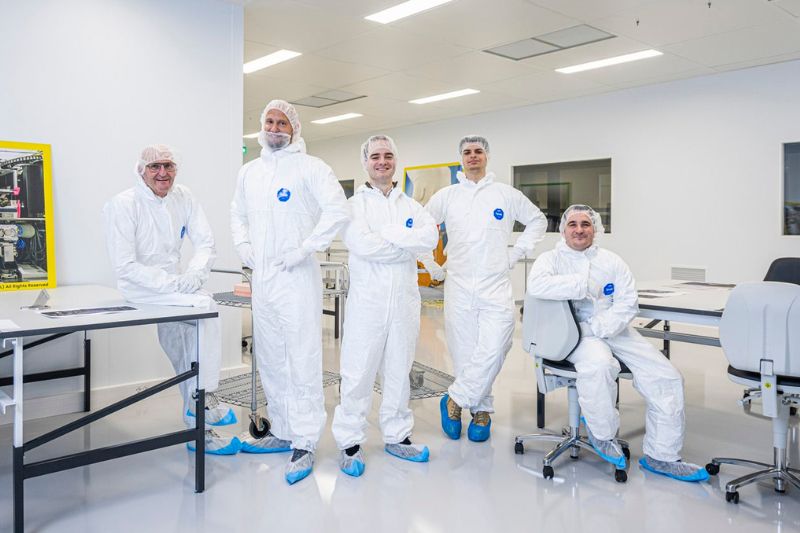
Kuijpers has completed the delivery of a professional cleanroom facility at a Dutch vocational college called Ter AA in Helmond.
The Netherlands-based engineering company worked in collaboration with partners including Cleanroom Combination Group (CCG), delivering the project through a multidisciplinary approach covering design, construction and commissioning.
“We wanted an environment where students learn not only what a cleanroom looks like, but also how to work in one. That requires different choices,” said Alexander Schoonenberg, Manager of Accommodation and Facilities at Ter AA.
The installation provides students with access to a fully functional cleanroom environment, enabling them to gain practical experience in areas including cleanroom assembly, gowning procedures, cleaning and maintenance.
The facility spans more than 200 sqm and is designed to replicate the conditions found in high-tech and semiconductor manufacturing environments.
The cleanroom was officially opened in October 2025 and is described as the first of its kind within vocational (MBO) education in the Netherlands.
Developed as part of a wider regional initiative to strengthen technical talent pipelines, the project aligns with efforts to support the semiconductor and high-tech industries in the Brainport region.
The facility will be used not only by students but also by companies seeking to upskill employees in cleanroom working practices.
Ter AA approached Kuijpers in spring 2025 with a tight timeline: the cleanroom needed to be operational by October.
The company assigned a single point of contact to streamline communication, allowing quick decision-making despite multiple internal stakeholders at Ter AA.
The facility was designed with student learning in mind.
Key cleanroom systems, such as pressure gauges, are visible so students can immediately see the effects of door openings or airflow changes.
A spacious PAL room allows instructors to guide students through gowning and procedure training step by step, prioritizing education over production efficiency.
Attention was paid not only to functionality but also to aesthetics.
Floor colors, furniture, and sightlines from the auditorium were carefully considered to create an environment that is visually clear and engaging.
A large glass façade ensures transparency, allowing students and visitors to observe cleanroom activity.
The cleanroom was delivered fully certified to ISO standards, including sustainable air handling, electrical installations, water drainage, and building envelope integration.
Stand-alone systems, backup circuits, and ring connections for utilities ensure flexibility for future expansion or maintenance without disrupting other areas of the building.
Connection points were installed throughout to allow new equipment to be added with minimal intervention.
Construction continued through the summer holidays, with close collaboration enabling rapid resolution of decisions on site.
The final cleaning took place a week before opening, and the facility was handed over on schedule and within budget, offering more capabilities than originally planned.
A second phase, the construction of a washing facility, was completed at the end of February, allowing students to work directly with materials and instruments.
Project managers noted the strong collaboration between Kuijpers and Ter AA created a sense of shared achievement, highlighting the impact of bringing professional cleanroom training into vocational education.


