


In February last year, construction firm Skanska unveiled its bold new strategy to create an advanced technology vertical division.
This new specialised operating unit focuses the company’s expertise on high-tech and semiconductor manufacturing.
Katie Coulson is the Executive VP and General Manager who is heading up this new division, and she sat down with Cleanroom Technology to discuss the launch and what their approach is to controlled environment builds within a wider construction firm.
What does the new “vertical” do?
The first thing that Coulson is quick to clear up is how the new vertical works in collaboration with Skanska’s geographically-based divisions. She explains that the idea is to centralise technical expertise on industries that require high levels of control in their environments, such as semiconductors and data centres. The vertical SAT division would then partner with any of the 28 US divisions for the actual execution. “It’s just enhancing that local market with expertise,” Coulson says.
This hybrid model combines local roots and existing local subcontractor relationships with specialised technical leadership. The best of both worlds in Coulson’s opinion: “Clients ask: who’s your local team? Do they understand the market? Because we do have that knowledge, it is an advantage.”
The expertise of SAT doesn’t just come down to the cleanroom itself, it includes “all the pieces of the puzzle”, such as heavy mechanical and electrical type work, as well as waste treatment, water treatment. Coulson says the team works on projects big or small to really hit on the demand for chip manufacturing.
When on the topic of the timing of the launch and what initiated the need for this change, Coulson points to the AI explosion as having a huge trickle-down impact on the cleanroom construction sector.
For anyone paying attention to technology innovation these days, you’ll know that the AI revolution is taking off. The need for chips to enable this computing need is through the roof, and companies are now allocating greater portions of their budgets to afford them to up their computing capacities. Headlines are even being made by many that are reducing headcount to afford this.
The tangential point to this is the recent push for domestic manufacturing in the US. Skanska is a major global company based in Sweden, but has a major existing presence in the US (Skanska USA), and the new vertical is US-based. Considering the huge onshoring push, Coulson says, “it really made sense” to launch this vertical in the US now. She explains that there is a huge amount of work ongoing and coming up that this will benefit.
Clients ask: who’s your local team? Do they understand the market?
Projects today have a need for speed
The type of projects that SAT are targeting can be extremely long-term. Major fabs can take years to build, with Semiconductor Digest reporting this year that fabs in the US take about 38 months to build.
This means that a company has to ascertain that a fab (which contains cleanrooms) will be required 5 years in advance. Markets can change hugely in this time, with supply chain costs fluctuations impacting construction materials. Being able to shorten this timeframe is critical, giving project teams greater predictability and control over timelines and budgets.
Prior to her SAT appointment, Coulson managed Skanska’s longstanding relationship with its largest high-tech manufacturing customer. From this, she took the importance of “speed to market” and how minimising construction time can be beneficial. “It's not like another construction project, where you have all this time to do pre-planning,” she explains. "We have to start when we're executing, we're constructing a lot of times before we have the final design, in order to be able to get all the work done.”
Aside from building and planning simultaneously, SAT is also using the MMC (modern methods of construction) approach of prefabrication and off-site manufacturing as tools to reduce delivery times. Using these tools, Coulson says that they turn over projects in 1-1.5 years, where normal approaches would take 5 years.
This approach not only accelerates construction but also integrates sustainability measures from the outset, allowing environmentally-conscious solutions to be embedded without slowing delivery.
Waste not, want not: The retrofit market
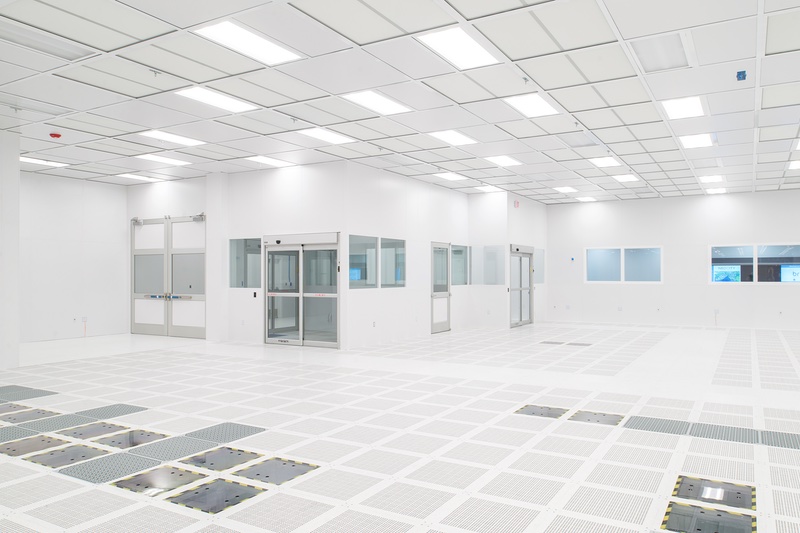
Exact timelines of projects can vary hugely depending on scale of the project. Coulson says that the projects under the SAT remit range widely from small retrofits worth “a couple million dollars” to massive semiconductor campuses in the hundreds of millions to billions range.
Though the major campuses might make worldwide headlines, it is actually the smaller retrofits where Coulson is seeing growth. She explains that due to constant technological evolutions, facilities require upgrades while operations continue. “You can’t have things shut down,” she says. “It’s important to have


