Introduction: When cleanrooms become lifelines
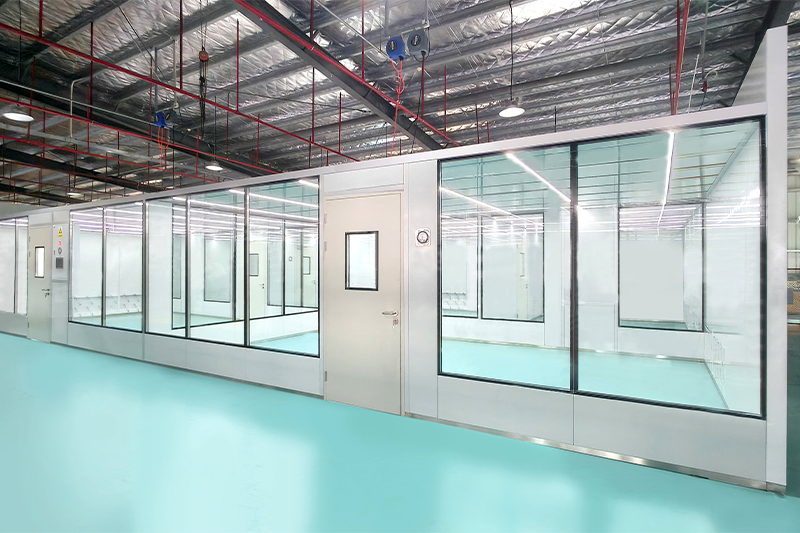
In a project that underscores its engineering capabilities in the highly regulated pharmaceutical sector, Airkey, a leading Chinese manufacturer of modular cleanroom systems, has successfully designed, fabricated, and delivered a comprehensive dual-zone modular cleanroom for a sterile compounding customer in the United States. Built to comply with both USP Chapter <797> for sterile compounding and USP Chapter <800> for hazardous drug handling, the project demonstrates the growing demand for turnkey, compliance-ready cleanroom solutions that can be installed quickly without extensive building modifications.
Scope and facility dimensions
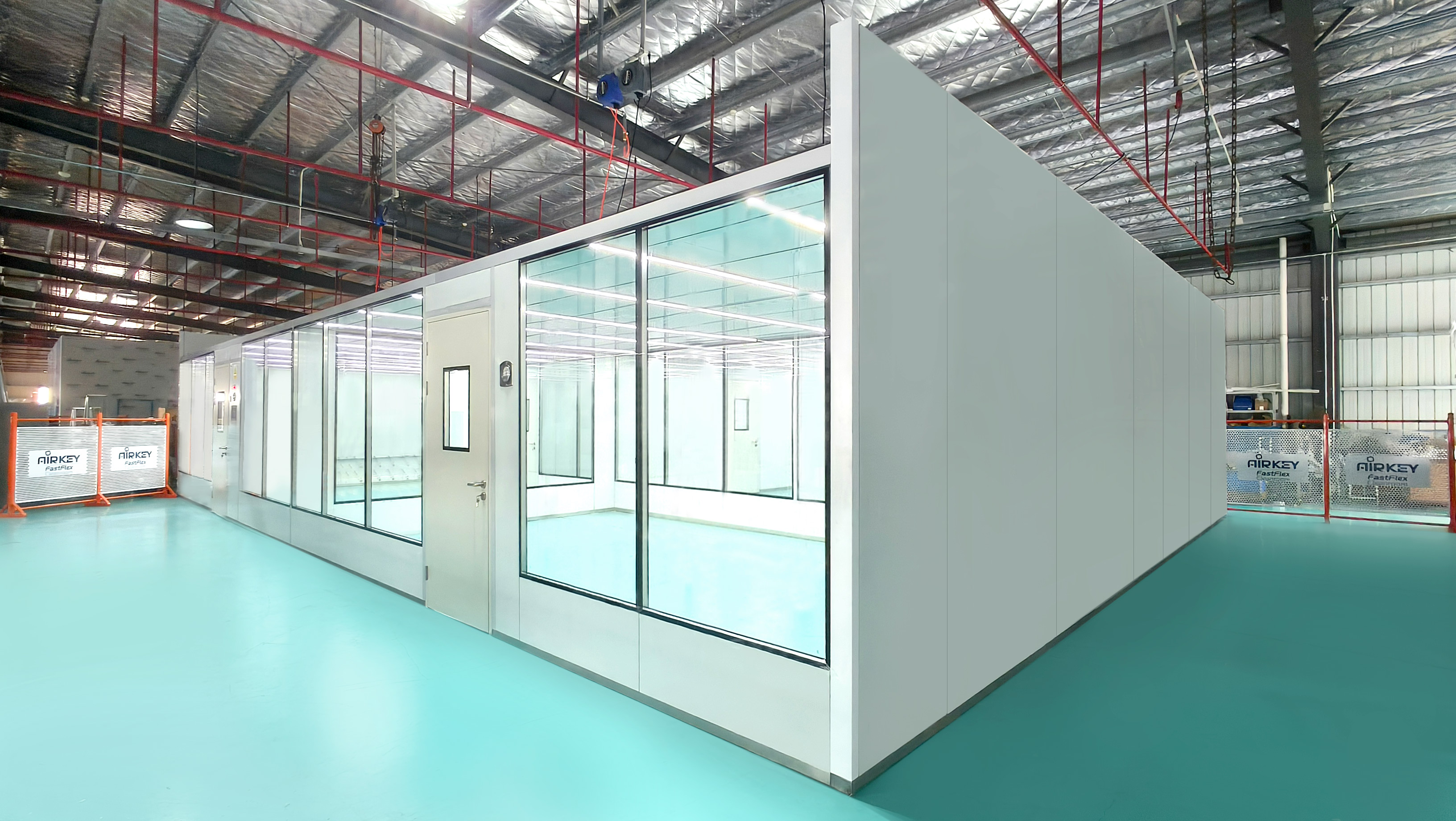
The modular cleanroom complex occupies a substantial footprint measuring 14.5 meters in length, 9.78 meters in width, and 3 meters in height. The facility comprises six distinct rooms, with half dedicated to USP <797> non-hazardous sterile compounding and the other half to USP <800> hazardous drug preparation. This dual-zone configuration allows a single cleanroom facility to support both non-hazardous and hazardous compounding operations - a significant advantage for pharmacies handling diverse drug preparations
Compliance-driven zoning and workflow
The cleanroom's layout reflects a thoughtful approach to contamination control, designed from the outset to meet the distinct requirements of both USP standards.
- USP <797> Positive Pressure Zone: This area is designated for non-hazardous sterile compounding and includes a preparation room, an anteroom, and a cleanroom. The anteroom functions as a transition zone for garbing and material transfer, providing access to the positive pressure preparation room where sterile compounding occurs . USP <797> focuses on ensuring that sterile preparations are free from microbial contaminants to protect patient safety .
- USP <800> Negative Pressure Zone: This area is designed for hazardous drug compounding and consists of a preparation room, a production room, and a non-sterile hazardous room. All USP <800> rooms operate under negative pressure to contain any airborne hazardous drug particles . This containment is a cornerstone of USP <800> facility design, ensuring that hazardous drug particles are pulled into the room and toward exhaust rather than escaping into adjacent areas . The goal of USP <800> is to protect healthcare workers from hazardous drug exposure .
- Interlocking and Pass-Through Systems: The cleanroom is equipped with pass-through chambers for material transfer, allowing items to be passed in and out without compromising the controlled environment . These pass boxes are interlocked to ensure that only one door can be opened at a time, maintaining pressure differentials and minimising the exchange of air between the cleanroom and the surrounding environment
Freestanding clearspan structural design
A standout engineering achievement of this project is the fully freestanding nature of the modular cleanroom. The system employs Airkey's proprietary clearspan technology, enabling the structure to stand independently without requiring suspension from the building ceiling or reinforcement of existing structures. The self-supporting aluminium framework carries all mechanical and airflow loads, allowing it to sit on a standard industrial floor without any overhead anchorage
Advanced HVAC and environmental control systems
Maintaining precise environmental conditions is critical for both USP <797> and USP <800> compliance. The cleanroom is equipped with a comprehensive HVAC system designed to meet the stringent requirements of both standards.
- Temperature and Humidity Control: All cleanroom areas are served by air conditioning systems that maintain temperature at 18-20°C and relative humidity at 45-58% . These parameters are essential for both personnel comfort and product integrity during sterile compounding operations.
- Variable Air Volume (VAV) Control: The system incorporates Variable Air Volume (VAV) dampers to precisely maintain constant airflow within the cleanroom . This is critical for:
- Preventing hazardous gas leakage in the USP <800> negative pressure rooms
- Stably maintaining pressure differentials between zones
- Preventing contaminant diffusion between areas of different cleanliness classifications
- Dedicated Exhaust System: The USP <800> production area is equipped with a dedicated exhaust system. Under USP <800> requirements, air from hazardous drug compounding rooms must be vented outside and not recirculated . This ensures that any airborne hazardous drug particles are safely exhausted out of the cleanroom, protecting operators from hazardous drug exposure .
- Pressure Differential Management: USP <797> requires a minimum positive pressure differential of 5 Pa between ISO classified areas , while USP <800> mandates a negative pressure of 0.01 to 0.03 inches of water column relative to all adjacent areas . The VAV system ensures these pressure relationships are precisely maintained.
Smart control and monitoring system
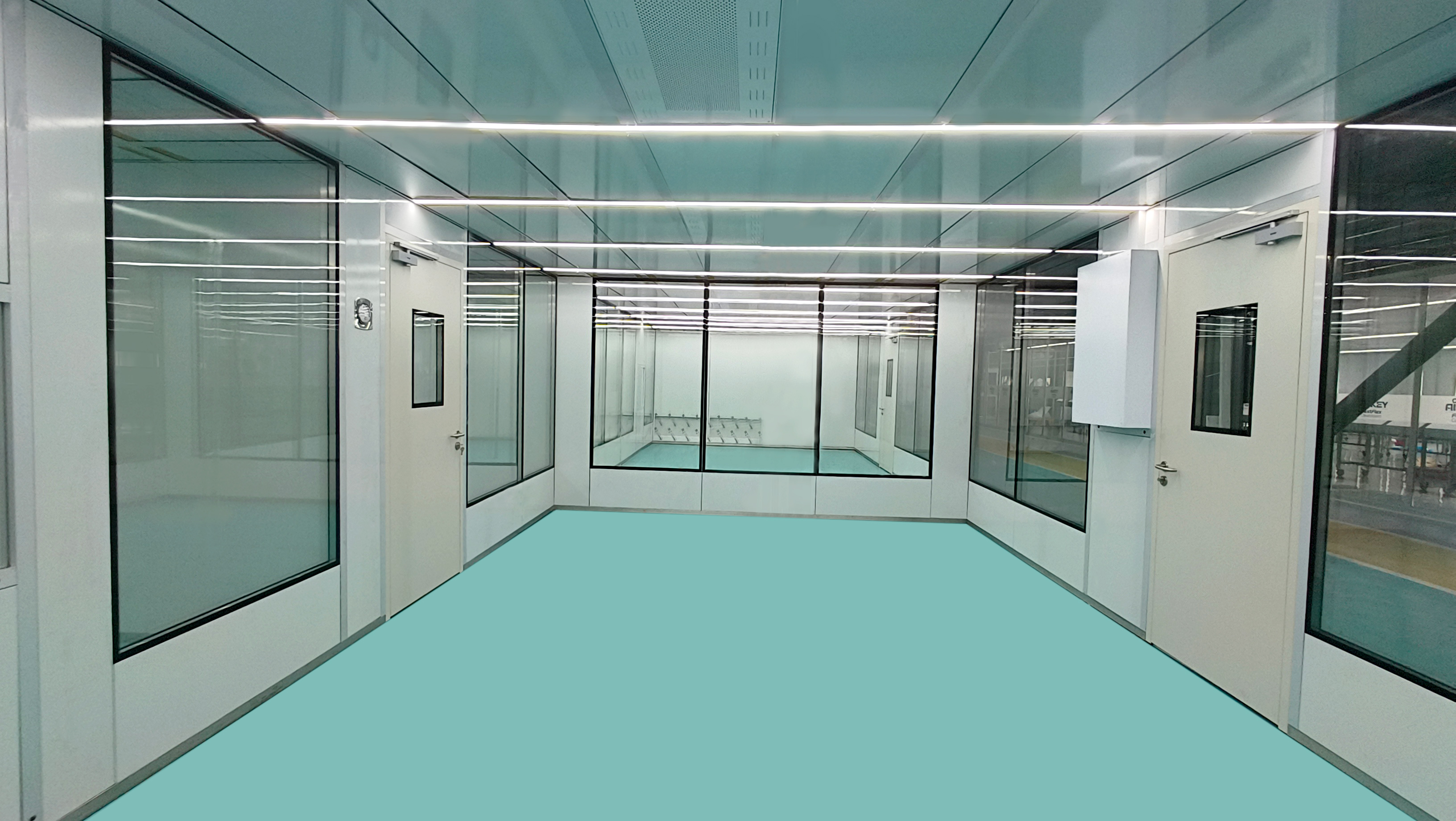
The cleanroom is equipped with a comprehensive sensor array integrated into a smart control system for real-time monitoring of all critical parameters.
- Environmental Monitoring: The system continuously monitors temperature, humidity, pressure differentials, and airborne particle counts. This level of monitoring is essential for verifying that the cleanroom conditions remain within specified limits, as required for compliance with regulatory standards and supporting quality assurance .
- Particle Count Monitoring: A particle counter integrated into the control system provides real-time monitoring of airborne particle counts, ensuring that ISO 7 cleanliness levels are consistently maintained throughout production operations .
- Data Integration and Compliance: The monitoring system maintains a complete record of environmental conditions, providing documentation for regulatory compliance and quality assurance purposes
Materials and construction methodology
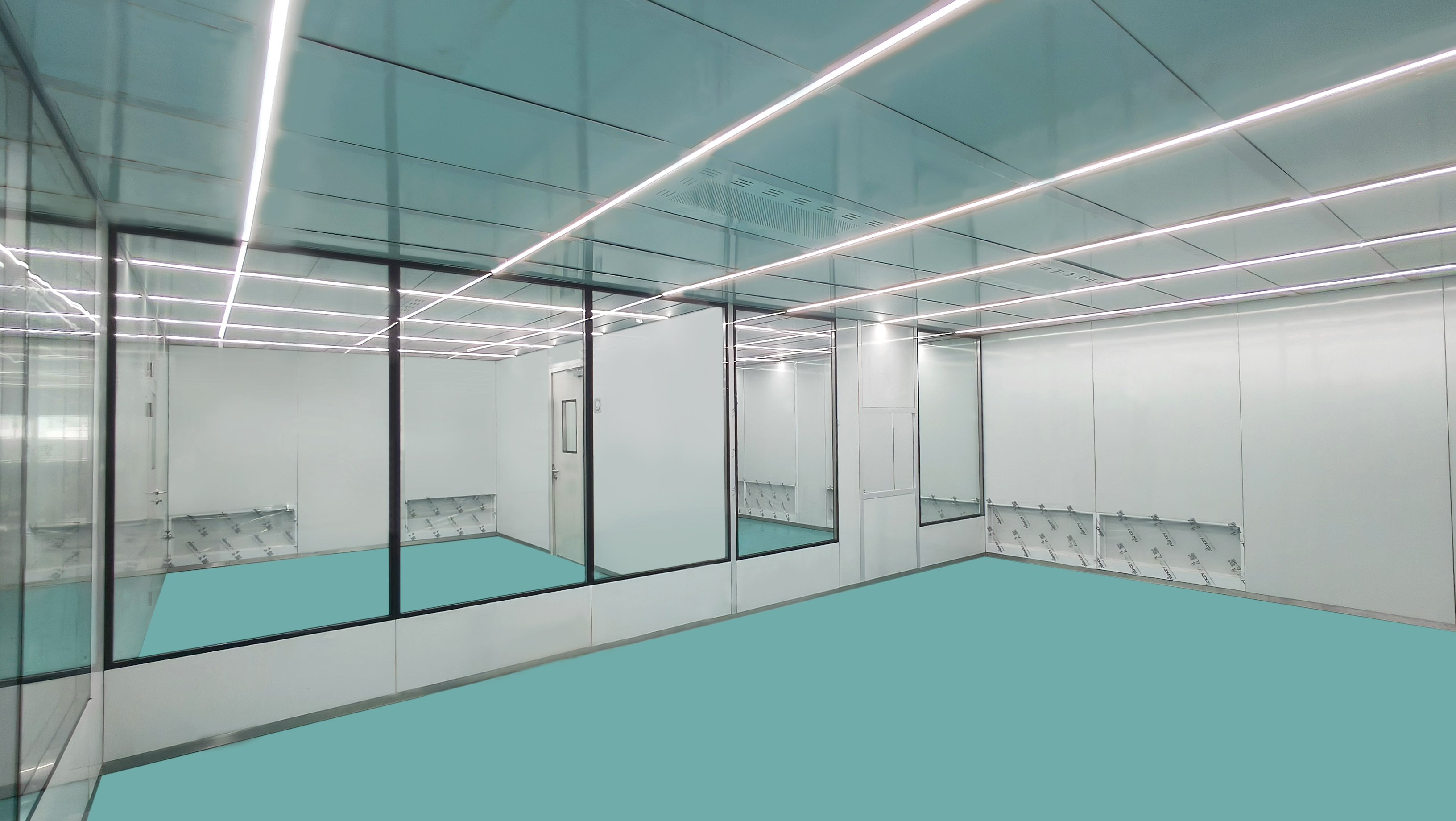
Every component of the modular cleanroom was fabricated in Airkey's Chinese manufacturing facility using high-quality, durable materials selected for their cleanroom compatibility, structural performance, and ease of maintenance.
- Primary Framing: Precision-extruded aluminium profiles offer an excellent strength-to-weight ratio, corrosion resistance, and a smooth surface finish that minimises particle accumulation .
- Wall and Ceiling Panels: Rock wool–sandwiched steel sheets provide effective thermal insulation, fire resistance, and sound attenuation .
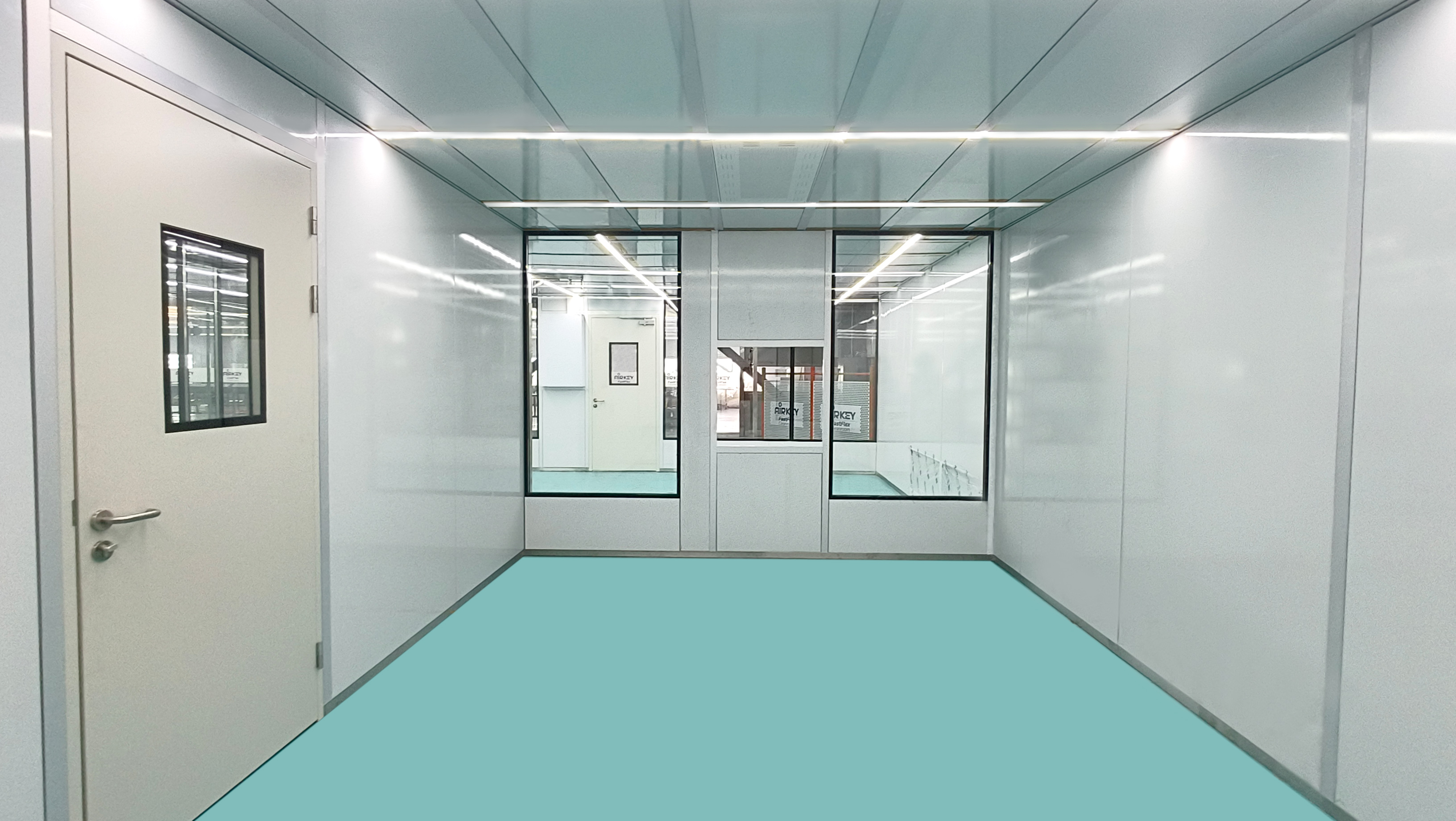
- Tempered Glass Windows: Strategically placed windows provide visibility for supervisory observation while maintaining the integrity of the controlled environment .
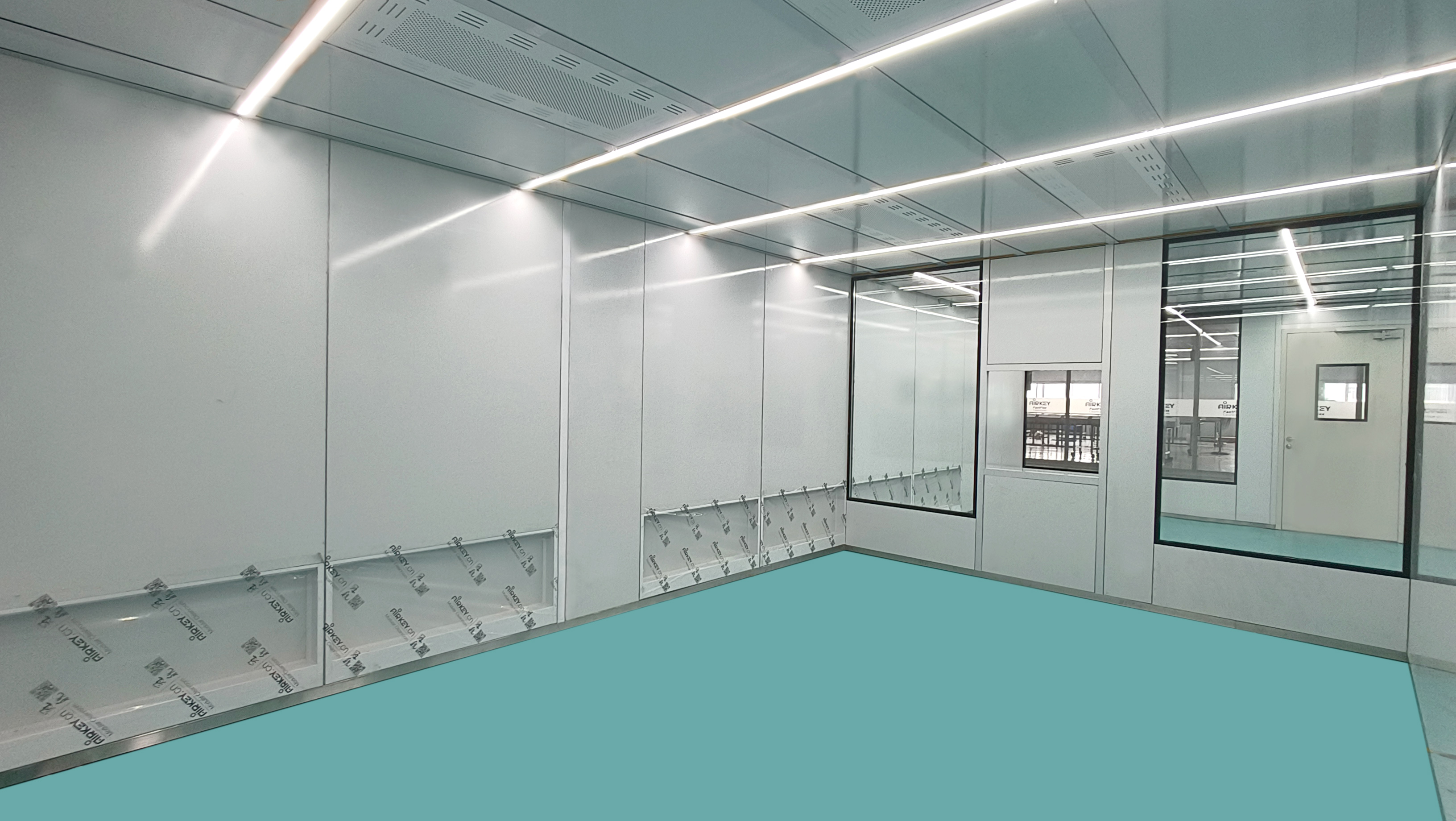
- Patent Air Return Panels: A distinctive feature of this project is Airkey's patented flush-mounted air return panels. Unlike conventional designs that require protruding return columns, these panels are integrated directly into the walls . This provides several advantages:
- Saves valuable cleanroom space – removes bulky, protruding return columns
- Creates smooth, easy-to-clean surfaces – reduces contamination risk
- Increases usable workspace – maximised floor area for equipment and operations
Prefabrication and factory preassembly
A defining feature of Airkey's delivery model is the comprehensive prefabrication and factory testing performed prior to shipment.
- Complete Factory Assembly: The entire modular cleanroom is preassembled at Airkey's factory, with every component—walls, glass panels, ceiling grid, FFUs, doors, pass boxes, power outlets, and control system—installed and tested in a controlled workshop environment .
- Comprehensive Testing: The system undergoes thorough testing including cleanroom classification verification, air velocity measurements, and lighting level checks in accordance with ISO 14644-1 and USP requirements . This ensures that all parameters meet specified requirements before the system is disassembled for shipment.
- Risk Reduction and Accelerated Installation: By identifying and resolving any fit or performance issues in the factory rather than on the customer's site thousands of kilometers away, this approach significantly shortens on-site installation time, reduces validation issues, and speeds up the transition from delivery to operational use.
Airkey does not ship components. Airkey ships certainty—the documented, verified confidence that a cleanroom will perform as designed, from the moment it arrives.